
Many teams still assume customer stories only work for closing someone already in the pipeline, which is why their case studies live in a far corner of the website or in a PDF that no one — not even AI — reads.
That may have made sense in an older, sales-led journey. But now that so many buyers complete their research on their own, a written case study is the raw material for a whole ecosystem of customer content that meets them at different stages of the journey.
Why customer stories do the heavy lifting
Before digging into the funnel, formats, and content matching, let's remember why customer content does the heavy lifting. Brands want to demonstrate their solutions in action, and they invest countless resources in creating storytelling to connect emotionally with their buyers. But anything a brand says about itself stays unsupported, unconvincing, even questionable. They lack the third-party credibility that builds trust. The authenticity of human voices bridges that gap. That's why you need your customers to tell the story.
Match the story to the stage
Which part of that story catches a buyer's attention depends on where they sit in the journey, and losing sight of that is what makes so many customer stories fall flat. A 1,000-word PDF won't feed the top of your funnel: a buyer who barely knows your name isn't going to give 10 minutes to a written piece.
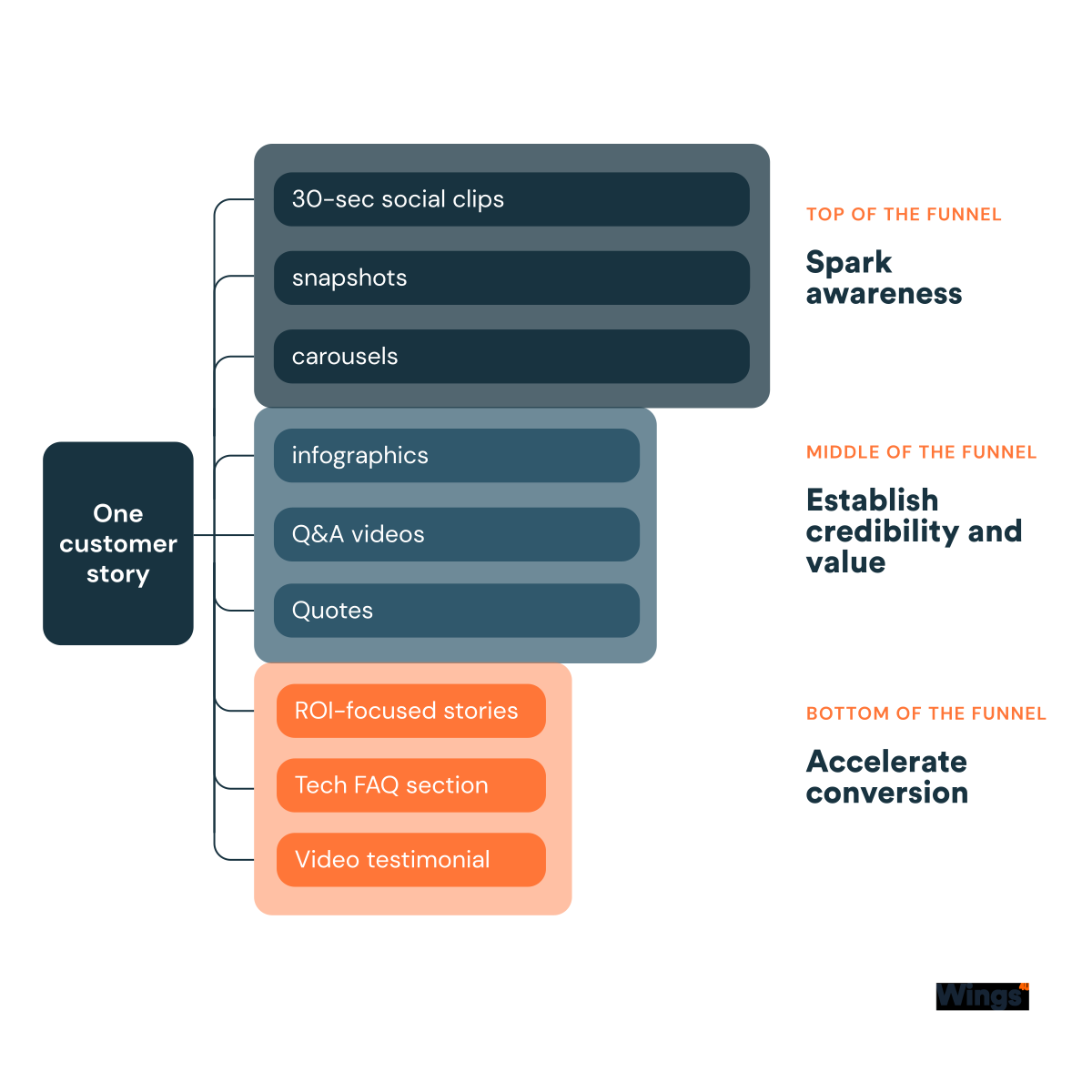
The move is to repurpose that one case study deliberately, so it earns trust at every stage, meeting the buyer earlier and more than once. A few ideas, stage by stage:
Top of the funnel
The goal is to spark awareness and signal relevance, enough to make them stop scrolling. The answer is short-form video and snapshots — content that's quick and easy to digest.
A bold hook carries it: the biggest challenge, or the most powerful outcome, in just three or four slides, or 30 seconds. If you manage to get a video testimonial, whether captured on-site or remotely, UCG-style is gold.
Middle of the funnel
Buyers know the brand but still need convincing. Your job is to establish credibility and value. An excellent and still-underused asset is infographics. They can exemplify real-world use cases for complex solutions. Very visually appealing, they stand out in AI-generated content feeds. Also, quotes cards that capture what working with the brand looks like. The challenge is selecting those that are self-explanatory in a few lines — focused on the value, the benefits, and a before-and-after.
Videos work too: a Q&A structure fits perfectly here. Customers answer the questions buyers want addressed before they decide whether to move forward or choose another brand.
This is where the traditional written story does its heaviest work, giving buyers a detailed enough overview while keeping the storytelling that nurtures consideration. This way, buyers can evaluate with confidence.
Bottom of the funnel
It's all about accelerating conversion. And that's why the classic case study needs some tweaks to land. ROI-focused content wins deals, in any format. Remember that, as many as 10 people weigh in on the decision — Gartner puts the typical B2B buying group at six to 10 — among them procurement, finance, and C-level roles who care about the numbers.
Also, technical evaluators assess the feasibility of an implementation — how easy a solution is to put into practice. So it's where it makes sense to include more technical detail, whether embedded in the copy, set out as FAQ-style questions at the bottom of a written piece, or in a video.
Here, more is more. Don't stress out trimming lines or scenes. You're providing the proof to drive decisions — reinforcing your value while reducing risk.
Turn repurposing into a habit
The point of repurposing stories isn't merely more formats. A carousel at the wrong stage, or a video carrying the wrong part of the story, changes nothing — what moves the buyer is the right channel, at the right moment, carrying the message that stage calls for.
The examples above are a starting point you can adapt to your own case. What makes it work is understanding your ICP's preferences and the answers your buyers seek as they move through the journey. So no single formula works.
While challenging, adopting visibility and repurposing must be an operating habit, not a one-off. It's what brings the most payoff without adding overhead for the customers who are already giving their time and trust to advocate for your brand. We all know how hard those sign-offs can be to get, only for the story to sit on the website waiting. It's time to put the stories to work.
At Wings4U, we help you amplify the reach of your customer voice by producing an ecosystem of content tailored to your needs. From conducting interviews to creating customer stories to repurposing them dozens of times, we create customer content that drives trust throughout the entire journey.